
Uthman Quran in Tashkent
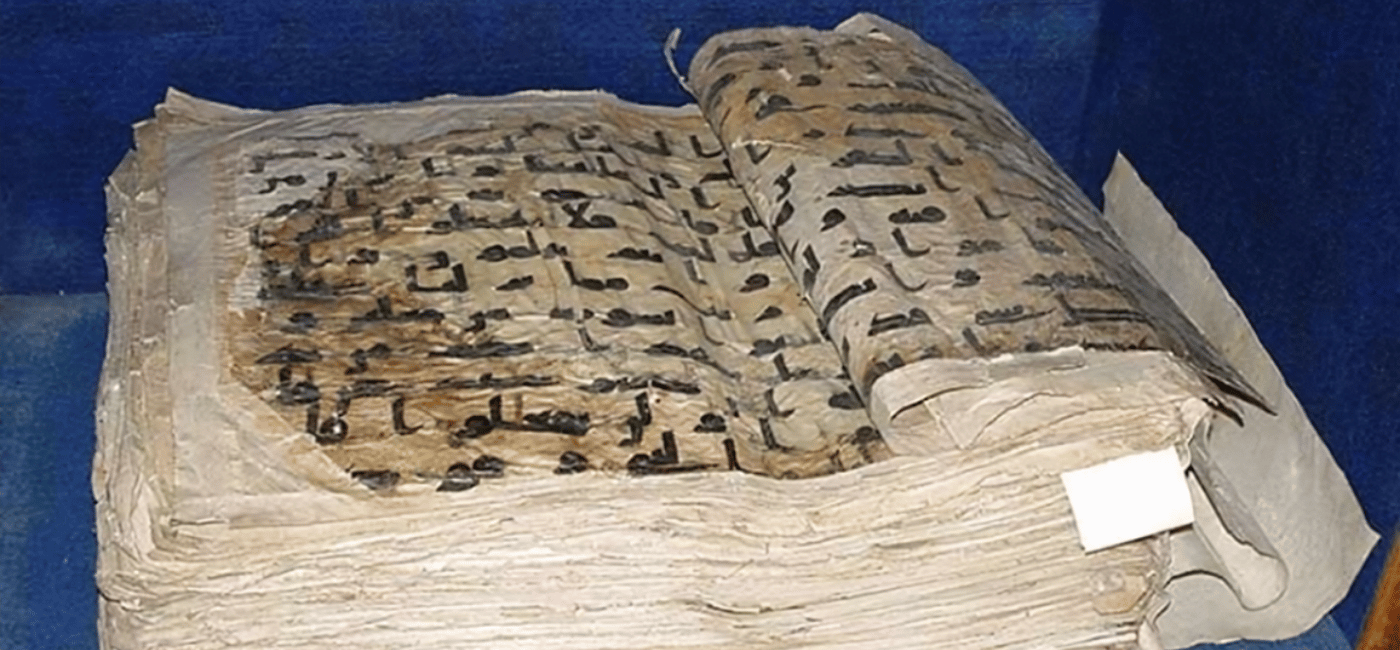
Uthman Quran in Khas-Imam Complex
One of the oldest structures of Khast Imam complex is the Muyi Muborak madrasah ("Sacred Hair"). The Muyi Muborak madrasah built in the 16th century, is also distinguished by its unique history. The hair of the Prophet Muhammad is stored in this madrasah, due to which it got its name.
There is evidence that in 1856-1857 by decree of the Kokand Khan Mirza Ahmed Kushbegi, the madrasah building was rebuilt again.
Currently, the Muyi Muborak Madrasah houses the library of the Muslim Board of Uzbekistan, which has a collection of about 20 thousand books, including about 3 thousand manuscripts and translations of the Koran in more than 30 languages.
The most unique manuscript stored in the library is the "Uthman Koran" ("The Quran of Osman"), dated 644-648 years.
According to legend, the Quran existed orally for 23 years and only certain fragments of it were recorded, which caused disagreement regarding the reading of some ayahs (verses) of the holy book.
The first initiator of the compilation of the Koran was the caliph Omar, who advised his predecessor, the caliph Abu Bakr, to carry out this charitable work. In recent years, the scribe of the Prophet Muhammad was Zeid ibn Sabit, who was entrusted with the task of compiling the manuscript of the Koran.
According to legend, Zeid collected and compared scattered records made on bones, stones, skin, palm leaves, in a word, on everything that was used then for writing, and also wrote down the stories of contemporaries of Muhammad, who kept in their memory "the revelations of Allah".
His work, recorded on separate sheets, constituted the first edition of the Quran "between two covers", which, however, did not correspond and did not reproduce.
During the reign of the third caliph, Usman (Osman) ibn al-Affan from the Umayyad clan, divine revelations were recorded in six copies on sheets of deerskin in the calligraphic handwriting "kufiy". Five copies of the Koran were sent to the main cities of the caliphate, and the sixth copy of the caliph was left to itself.
The successor of Caliph Usman - Ali took this manuscript from Medina to Kufa, his new capital. It was from there that she was taken by Amir Temur to Samarkand, where she was carefully kept in a specially equipped cell of the Nodira Divanbegi madrasah, until the Russian imperial authorities seized it in 1869.
The Quran was taken to St. Petersburg and stored in the imperial library, and after the October revolution, at the request of Russian Muslims, it was transferred to Ufa.
From there, a unique manuscript was returned to Turkestan in 1924. The manuscript was stored first in the mosque of the Turkestan Islamic Society, then in the Historical Museum of the Peoples of Uzbekistan.
Since 1989, the "Usman Quran" has been in the library of the Office of Muslims of Uzbekistan. This text of the Quran was recognized as canonical in the most numerous Sunni direction of Islam.
On August 28, 2000, the UNESCO international organization issued a special certificate testifying that the book of Usman kept in Tashkent is the only original manuscript of the Koran that has been preserved to this day.
A few years ago, an exact handwritten copy of Usman’s book, made on 704 pages of buckskin with Kufic writing, was created by a contemporary calligrapher Habibulloh Salih, an employee of the source fund of Tashkent Islamic University.
The binding and cover of this copy, made in full accordance with the original, were made by Sunnatiloh Pulat.
Hidden Gems of Uzbekistan

