
Music in Uzbekistan
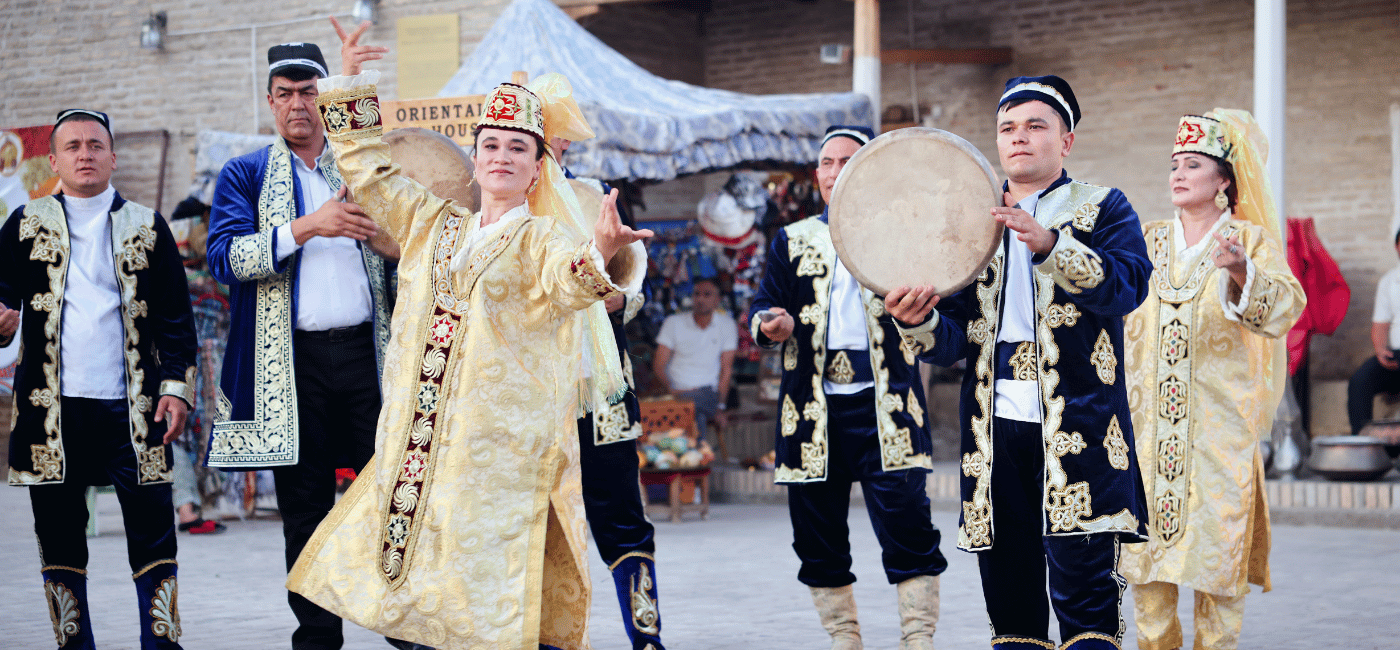
Information about Uzbek Music
The music of Uzbekistan has reflected the diverse influences that have shaped the country. Because of the long history of music in the country and the large number of different music styles and musical instruments, Uzbekistan is often regarded as one of the most musically diverse countries in Central Asia.
Classical Music of UzbekistanThe music of what is now Uzbekistan has a very long and rich history. Shashmaqam, a Central Asian classical music style, is believed to have arisen in the cities of Bukhara and Samarkand in the late 16th century.
The term "Shashmaqam" translates as six maqams and refers to the structure of music with six sections in different musical modes, similar to classical Persian traditional music. Interludes of spoken Sufi poetry interrupt the music, typically beginning at a low register and gradually ascending to a climax before calming back down to the beginning tone.
After Turkestan became part of tsarist Russia in the 19th century, first attempts were taken to record national melodies of Turkestan. Russian musicians helped preserve these melodies by introducing musical notation in the region.
In the 1950s, Uzbek folk music became less popular, and the genre was barred from radio stations by the Soviets. They did not completely dispel the music. Although banned, folk musical groups continued to play their music in their own ways and spread it individually. After Uzbekistan gained independence from the USSR in the early 1990s, public interest revived in traditional Uzbek music.
Nowadays Uzbek television and radio stations regularly play traditional music.
The people's Artist of Uzbekistan Turgun Alimatov is considered by broad musical public and ethnomusicologists as the first virtuous of Shashmaqam, Uzbek classical and folklore composer, and skilled Tanbur, Dutar, and Sato player.
He has gained widespread popularity not only in Uzbekistan, but around the world with his unparalleled mastery in his performances and compositions. His most famous compositions include "Segah", "Chorgoh", "Buzruk", "Navo", and "Tanovar". His image is associated with national pride and has been presented as the symbol of Uzbek classical music to the world.
Another well-known Uzbek composer is Muhammadjon Mirzayev. His most famous compositions include "Bahor valsi" ("The Spring Waltz") and "Sarvinoz." "Bahor valsi" is played on Uzbek television and radio channels every spring.
Contemporary Music of UzbekistanMany forms of popular music, including folk music, pop, and rock music, have particularly flourished in Uzbekistan since the early 1990s. Uzbek pop music is well developed, and enjoys mainstream success via pop music media and various radio stations.
Many Uzbek singers such as Sevara Nazarkhan and Sogdiana Fedorinskaya, Rayhon Ganieva have achieved commercial success not only in Uzbekistan but also in other CIScountries such as Kazakhstan, Russia, and Tajikistan.
InstrumentsA large number of musical instruments can be found in Uzbekistan. Traditional instruments include:
String
- Dutor (long-necked fretted lute)
- Rubob (long-necked fretted lute)
- Tanbur (long-necked fretted lute)
- Tor (long-necked fretted lute)
- Ud (long-necked fretted lute)
- Gʻijjak (spike fiddle)
- Chang (struck zither)
Wind
- Karnay (long trumpet)
- Nay (side-blown flute)
- Qoʻshnay (clarinet like instrument made from reed)
- Surnay (loud oboe)
Percussion
- Doira (frame drum)
- Dovul (drum)
- Nogʻora (pot shape drum covered with leather on the top)
- Qoshiq (spoons)
- Zang (bracelets)
Related topics

