
Bibi-Khanym Mosque in Samarkand
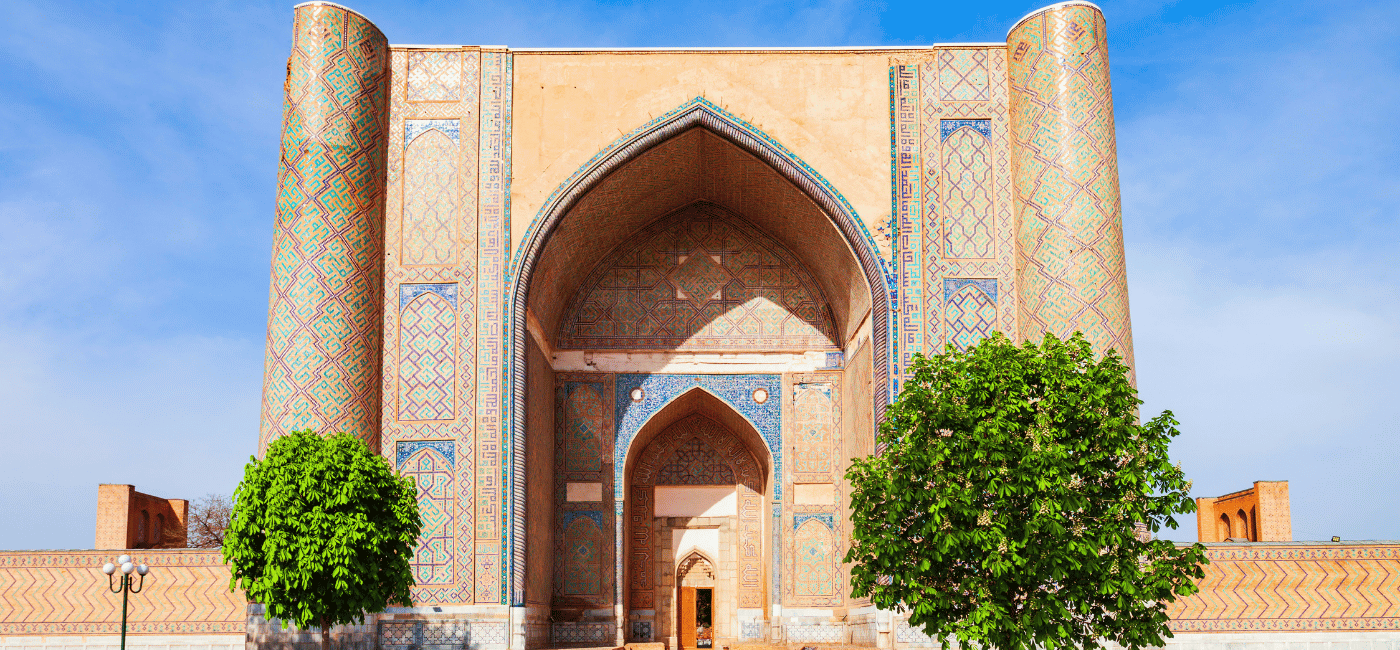
Bibi Khanym Mosque
The mosque Bibi-Khanym Mosque (Bibi Hanim) is one of the most important monuments of Samarkand. In the 15th century it was one of the largest and most magnificent mosques in the Islamic world. By the mid-20th century only a grandiose ruin of it still survived, but now major parts of the mosque have been restored.
According to the manuscripts, the mosque was erected by the order of Timur in 1399-1405. It possesses the traits typical for many Muslim medieval constructions, especially aivanyard compositions. The mosque follows the basic plan of the courtyard mosque.
Its outer walls enclose a rectangular area which measures 167 metres (182.63 yards) in length and 109 metres (119.20 yards) wide and runs roughly from northeast to southwest — the Qibla accordingly. However the size of the site vacant of covered galleries was only 78 by 64 meters.
Entering the Mosque from the northeast through the vast (35 metres high) parade portal leads to the courtyard. A monumental dome above a square base, around 40 m high, rises on the opposite site of the courtyard. The dome is the largest cupola of the mosque. Nevertheless, the dome cannot be seen from the courtyard, for whole building is covered up from inside by the grandiose pischtak, which framed a monumental, deeply embedded Iwan.
The Iwan does not allow getting inside the underlying construction supporting the dome; this can only be done from the sides. Two other domes associated with the Iwans, more modest in size, face the center of the long sides of the courtyard. Thus the Bibi-Khanym Mosque implements the classic architectural type of the "Four-Iwan scheme".
Formerly, there were open galleries measuring 7.2 m high inside the courtyard. Their cover was formed from the juxtaposition of many small, flat brick vaults and domes supported by a forest of more than 400 marble columns and buttresses. Today, only hints of the galleries can be seen.
Four minarets at the outer corners of the site have been restored. Four other, more majestic minarets that flanked the Portal arch of the entrance and the Pischtak of the main domed building are not completed yet.
In the middle of the courtyard is located the stone pedestal — the huge Quran stand — crafted from ornate marble blocks. This remarkable sight originates from the time of Timur.
The huge Bibi-Khanym Mosque with its three domed rooms, the covered galleries and the open courtyard was intended to gather the entire male population of Samarkand city for the joint Friday prayers.
In the construction of three domes of Bibi-Khanym mosque, sophisticated in Timur's time, one important innovation was applied: a two-fold construction, where the internal dome hall neither by the form nor by height corresponds to the dome's shape from outside. There is a hollow space between the inner ceiling and the outer cupola.
This dome construction allowed the main hall of the mosque to be committed to the proportions and the aesthetics of the 30 m high interior above the mihrab. Meanwhile, the 40 m high outer dome of the main building could be designed for maximal impression and visibility. This scheme was applied also to the lateral dome structures that allowed making modest buildings the figuration tower-like structures with elegant melon-shaped and longitudinally ribbed outer domes.
The interiors of the mosque contain gilding, imitating local brocade embroideries. Bibi-Khanym mosque was one of the most ambitious architectural projects of the Timurid period and influenced the architecture of Central Asia as well as of Iran and Afghanistan.
Entrance fee: 2.5 USD
List of Top Sights to See in Samarkand

