
Mausoleum Ishratkhana in Samarkand
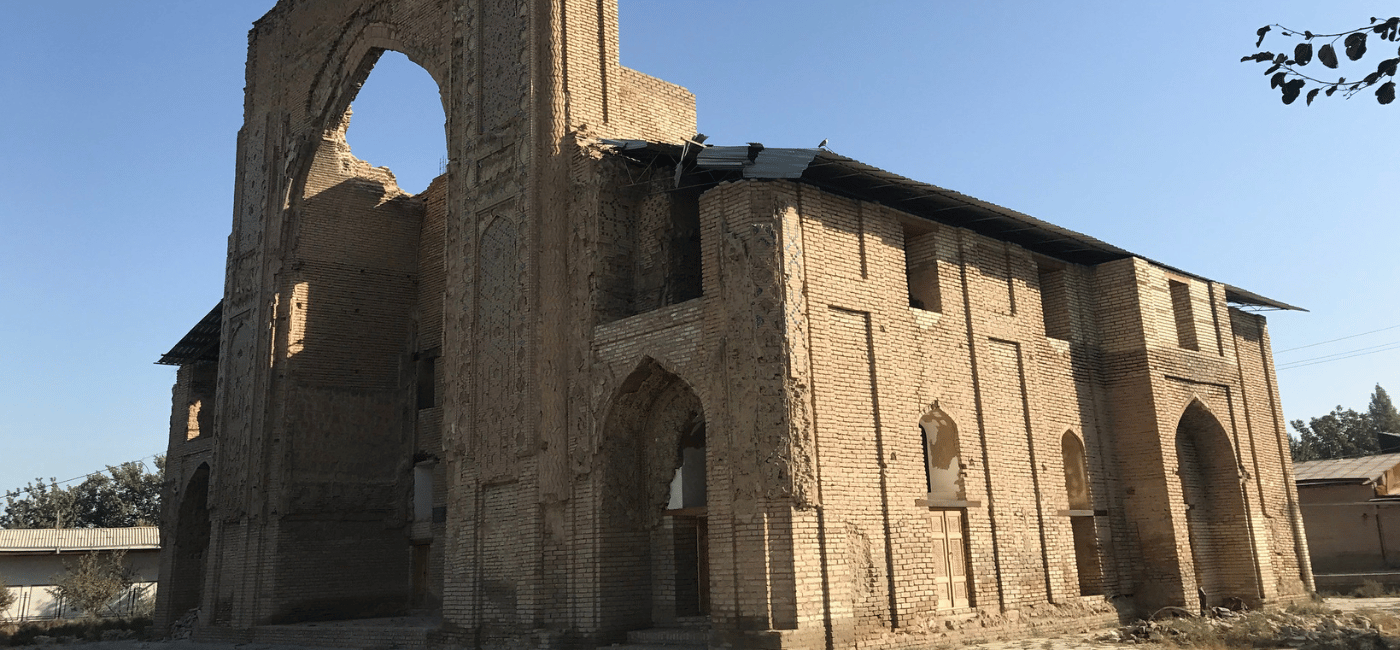
Ishratkhana Mausoleum
Ishratkhana is an architectural monument-mausoleum in Samarkand, built during the reign of Timurid Abu Seyid (1451-1469). The building, apparently, was the burial place of the representatives of the Timurid dynasty, since during the excavations of 1940 several female burials were discovered.
Currently, the building is in ruins, with the dome and high drum were destroyed relatively recently - during the earthquake of 1903.
Since the appearance of the first image of the mausoleum in 1869, the national name "Ishrathana" (Persian "House of Amusements") has been assigned to the monument, based on Samarkand folklore of the 19th century, telling about a romantic meeting of Amir Temur, after which the great emir ordered to build a palace here.
The name firmly entered the academic literature and lists of objects of cultural heritage of both the Uzbek SSR and the first years of independent Uzbekistan.
But at the beginning of the XXI century, opponents called for the monument to be named differently, referring to the immorality of the use of the term "entertainment house" to the mausoleum and suggesting an invented Arabic replacement for this name - "Ashrathona", given that the Arabic word "ashrat" is translated as "ten", and all together ("Ashrathona") can be translated as "10 rooms".
However, this polemic does not make any sense, since it disputes the popular name "Ishratkhana" long established in the literature, and any attempts to consolidate the new name ("Ashrathona") will stumble on the absence of any documentary evidence.
List of Top Sights to See in Samarkand

