
Ak Mosque in Khiva
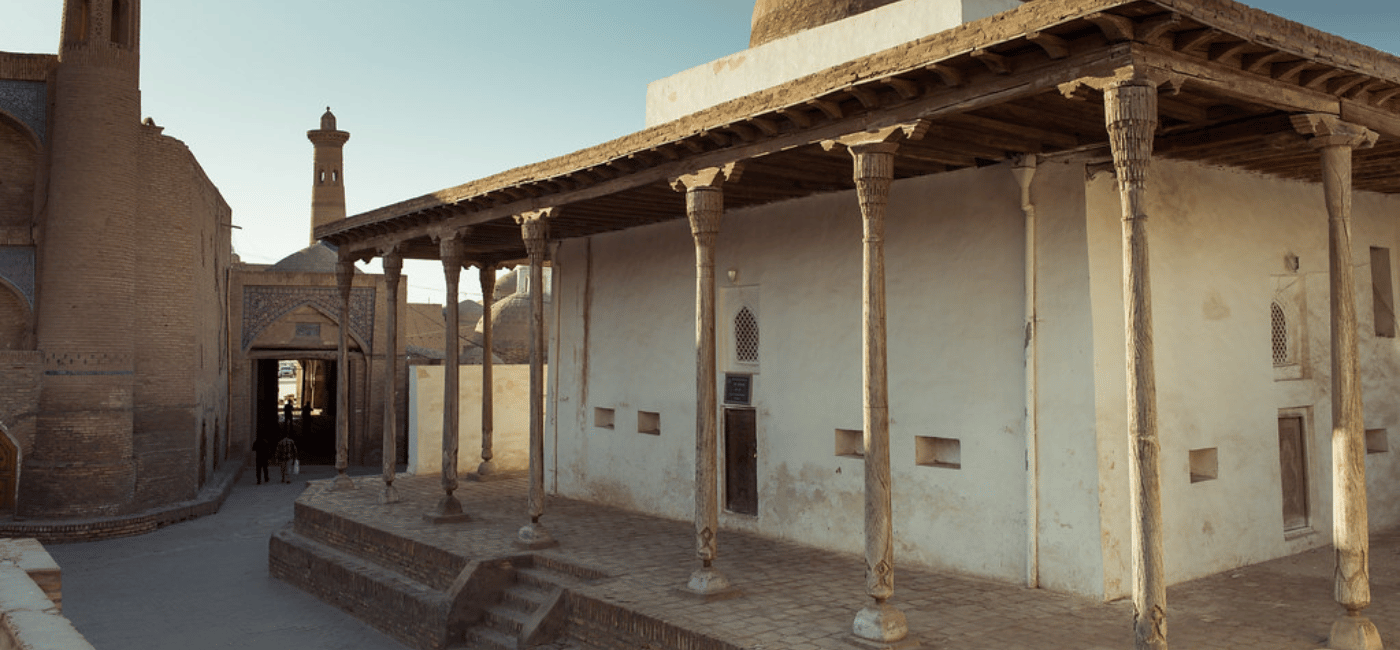
Ak Mosque
The Ak Mosque, also known as the "White Mosque," is a historic religious structure located near the eastern Palvan-Darvoza gate within the Ichan Kala, the walled inner city of Khiva, Uzbekistan. This mosque is a notable example of the city's architectural heritage and has served as a neighborhood place of worship for centuries.
Historical Background
The construction of the Ak Mosque occurred in multiple phases. Its foundation dates back to 1647 during the reign of Anush Khan, a ruler from the Arabshahid dynasty. However, the main structure was completed later, between 1838 and 1842, under the rule of Allakuli Khan of the Kungrat dynasty. This timeline is corroborated by inscriptions found on the mosque's doors, which also mention the names of the Khivan woodcarving masters involved in its creation.
Architectural Features
The Ak Mosque is characterized by its modest yet elegant design, reflecting its function as a quarter mosque for daily prayers. The main building consists of a square domed hall measuring approximately 6.35 by 6.35 meters. This central chamber is surrounded on three sides by a portico (iwan) supported by intricately carved wooden columns, creating a serene and inviting atmosphere for worshippers. The total dimensions of the mosque, including the portico, are 25.5 by 13.5 meters.
The mosque's exterior is relatively unadorned, aligning with the simplicity typical of neighborhood mosques. However, its doors and windows feature exquisite wood carvings, showcasing the high level of craftsmanship of the period. The windows are adorned with ganch lattices, adding to the aesthetic appeal while allowing natural light to filter into the interior space.
Cultural Significance
As a neighborhood mosque, the Ak Mosque played a vital role in the daily spiritual life of Khiva's residents. Its strategic location near the Palvan-Darvoza gate made it easily accessible to the local community. Today, the mosque stands as a testament to Khiva's rich cultural and architectural history, attracting visitors who seek to appreciate its historical significance and architectural beauty.
The Ak Mosque's enduring presence within the Ichan Kala contributes to Khiva's designation as a UNESCO World Heritage Site, preserving the city's legacy as a center of Islamic culture and architecture.
List of Top Sights to See in Khiva

