
Arab Muhammad-khan Madrasah in Khiva
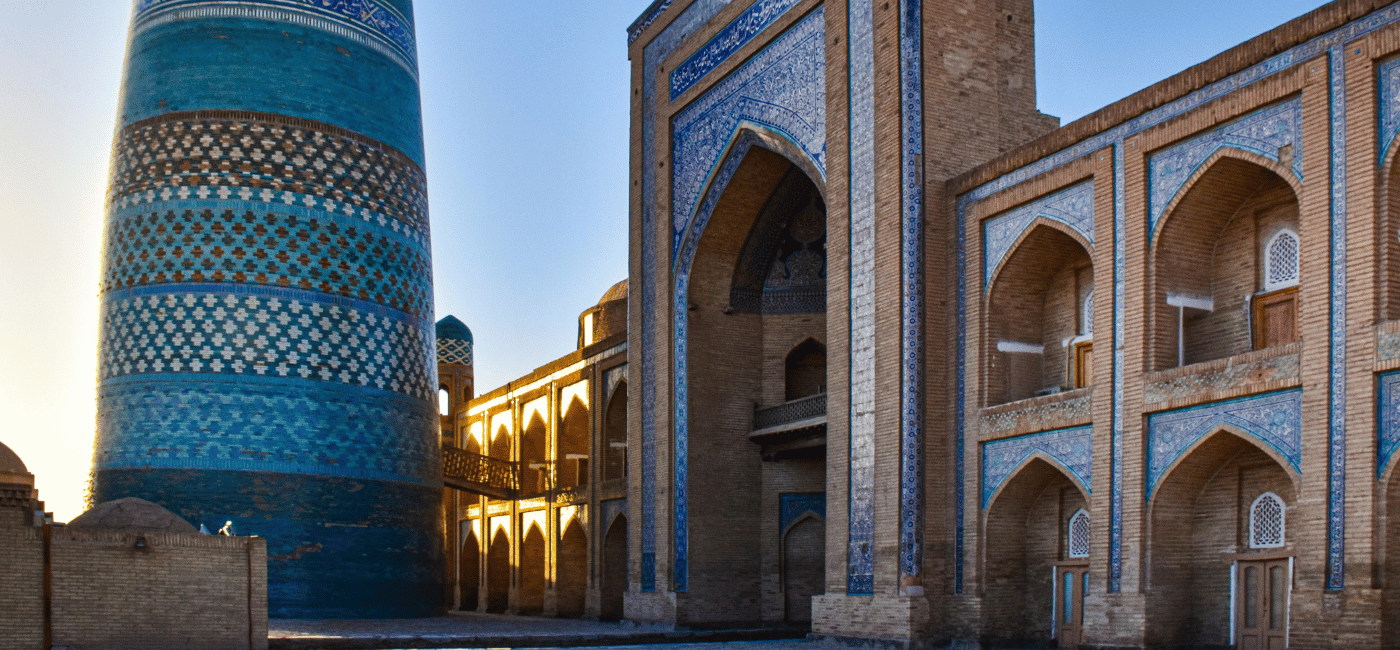
Arab Muhammad-khan Madrasah
The Arab Muhammad-khan Madrasah is one of the oldest and most historically significant Islamic educational institutions in Khiva, Uzbekistan. Built in 1616 by Arab Muhammad-khan, the ruler of the Khorezm Khanate, the madrasah played a key role in the development of Islamic education and the spread of religious knowledge in the region.
Historical Background
Arab Muhammad-khan decided to relocate the capital of the Khorezm Khanate from Urgench to Khiva in the early 17th century due to constant threats from nomadic tribes and water shortages in the Amu Darya delta. To mark this important event, he commissioned the construction of the Arab Muhammad-khan Madrasah, making it one of the first major Islamic educational institutions in the city.
The madrasah initially featured a single-story structure with a simple yet elegant architectural design, typical of Khorezmian architecture of the time. However, it underwent major renovations in 1838 under Allakuli Khan, who added a second story, expanded the number of student cells (hujras), and modified the main entrance portal to give the building a more refined look.
Architectural Features
The madrasah follows a rectangular layout with a central courtyard, surrounded by student cells (hujras), lecture rooms, and a mosque.
The main portal (pishtaq) is adorned with traditional Khorezmian brickwork and decorative tile inscriptions.
The cylindrical corner towers were originally built for structural support and defensive purposes.
The interior walls are decorated with carved wooden doors and ceramic tile patterns, showcasing the artistic craftsmanship of the Khorezm region.
Educational and Cultural Significance
The madrasah served as a center of Islamic learning, where students studied Quranic teachings, Islamic jurisprudence (fiqh), literature, and philosophy. One of the most notable scholars associated with the madrasah was Muhammad Rahim Khan II, the ruler of Khiva in the 19th century, who was also a renowned poet and intellectual.
Current Status
Today, the Arab Muhammad-khan Madrasah is part of the Ichan Kala UNESCO World Heritage Site in Khiva. While it no longer functions as an educational institution, it is preserved as a historical and cultural landmark. Visitors can explore its ancient corridors, intricate wooden carvings, and stunning architectural elements, offering a glimpse into Khiva’s rich Islamic and architectural heritage.
This madrasah remains a symbol of Khorezm’s dedication to knowledge, religion, and architectural innovation, attracting thousands of tourists and historians from around the world.
List of Top Sights to See in Khiva

