
Kukeldash Madrasah in Tashkent
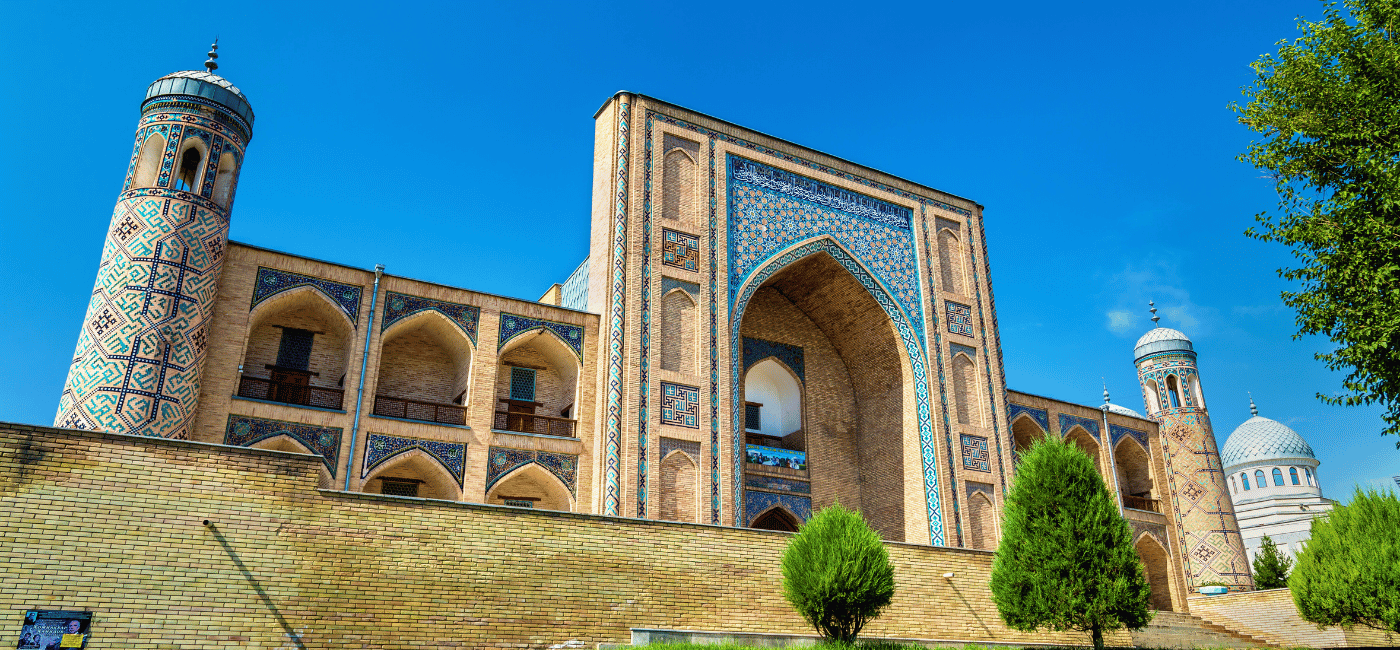
Kukeldash Madarsah
Kukeldash Madrasah is a medieval madrasa in Tashkent. It was built around 1570 by the Shaybanid Dynasty of rulers.
In the Middle Ages, the hot and arid Central Asia was a real oasis in which science and culture flourished. Being smart, understanding art and theology is the gentleman's set of a successful young Uzbek man of that time. Due to the lack of universities in medieval Tashkent (in their modern concept), the role of education centers was played by madrassas - Muslim educational institutions that serve as secondary schools and theological seminaries.
Kukeldash is the largest institution of its kind and, concurrently, one of the iconic architectural monuments of the capital of Uzbekistan. It is located in the historical center of Tashkent - in the area of Chorsu Square, next to the bazaar of the same name.
During its existence, the Madrasah Kukeldash was used as a fortress and a hotel, survived two powerful earthquakes. Now here, as well as 4 centuries ago, an Islamic educational institution works.
The current appearance of the building is different from the original. True, modern builders and restorers should pay tribute - the size and architectural design of the monument are fully consistent with the canons of medieval architecture.
Kukeldash madrasah has a traditional architecture for such institutions: a spacious courtyard surrounded by two floors of hujras (cells), where students now live, and the Jami mosque in the corner.
The main facade is decorated with a high portal, on which authentic elements of decor are preserved: majolica and glazed brick (though its arches are lit with modern lamps).
Loggias and corner minarets are arranged on the sides of the portal. The windows are equipped with protective panels - panjara. If you take a closer look at them, you can notice the names of Muhammad and Allah as if braided in an ornament.
To the left of the madrasah along its very end lies a road leading to the Chorsu Bazaar.
List of Top Sights to See in Tashkent

